In Abudwak, business skills and a member-run savings group have helped Laylo Afi Warsame turn small, uncertain earnings into a well-stocked shop, a habit of saving and a safety net for her family.
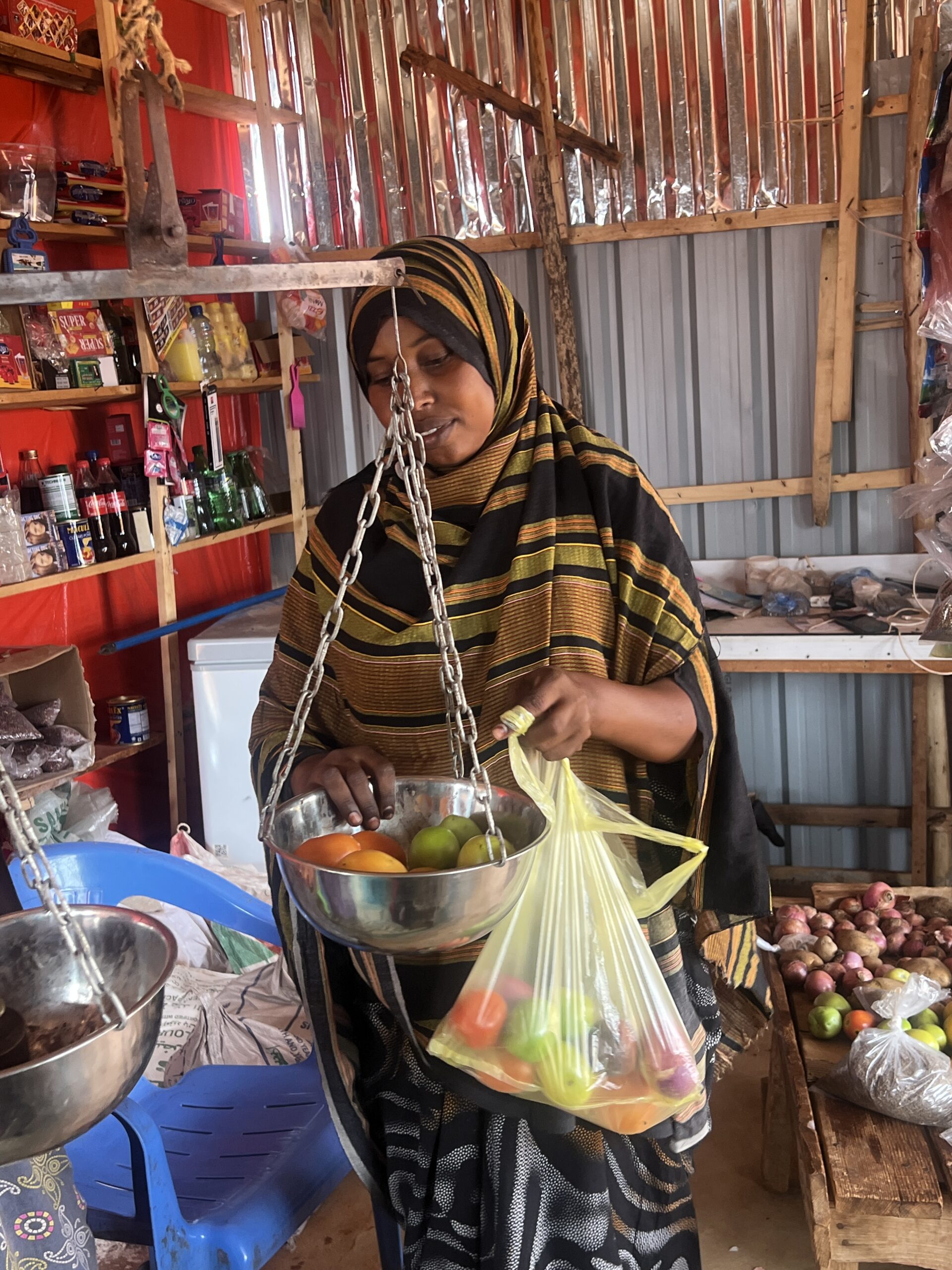
Laylo Afi weighs out tomatoes and limes on a hanging scale, bagging them for the next sale.
Behind the counter of her small shop in Abudwak District, in the Galgaduud region of Galmudug State, Laylo Afi Warsame weighs out tomatoes and limes on an old hanging scale, bagging them for the next sale. Her shelves are lined with the goods her neighbours need every day: cooking oil, tins, soap, soft drinks, sacks of staples, and fresh onions and potatoes stacked by the door.
It is a busy, well-stocked shop, and it is hers. Not long ago, it would have been hard to imagine.
Most families in this part of central Somalia have long depended on livestock. The drought that gripped the region between 2020 and 2023 wiped out herds, and with them the savings of many households, pushing families into towns like Abudwak, where work is scarce and prices are high. For women, who often carry the family’s daily needs, a reliable income can decide whether children eat well and stay in school.
“Before I joined this program, I tried to earn an income through small jobs and a little trade,” Laylo recalls. “That income sometimes did not cover the family’s needs, like food, the children’s schooling, and other costs.”
The hardest part, she says, was not only that money was short. She lacked the knowledge and the capital she needed to grow what little business she had. Without either, every month was a struggle to stretch too little across too many needs, and when money ran out, borrowing was often the only way through. That changed when she joined the women’s economic empowerment programme run by the Nomadic Assistance for Peace and Development (NAPAD), with funding from German Doctors and German Cooperation. The programme gave her the chance to build both her business and her skills, starting with the basics of how money should be managed.
“I learned how to plan my money, how to separate capital from profit, how to record income and expenses, and how to save part of what I earn,” she explains.
Planning, Saving, Growing
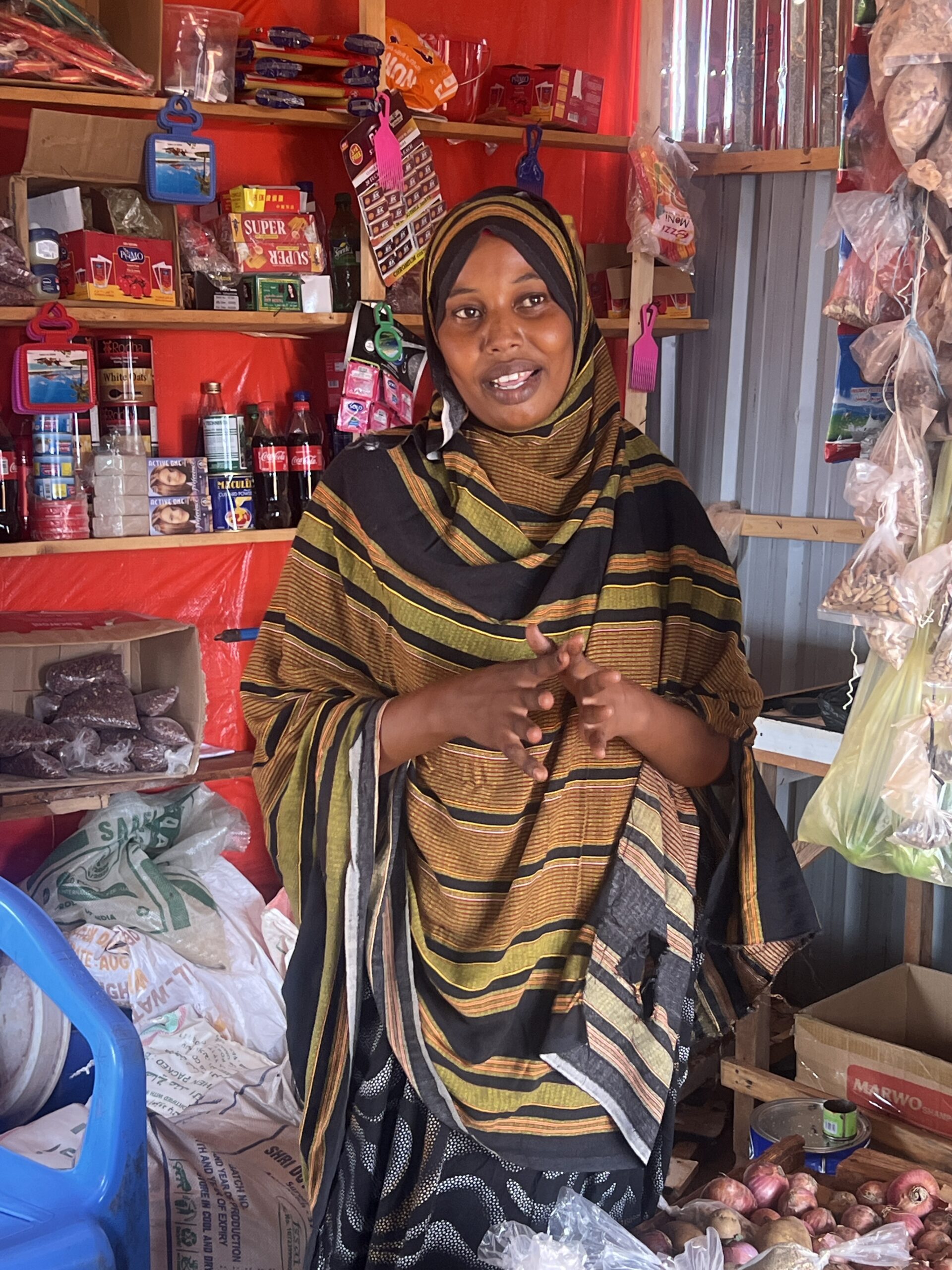
Laylo in her shop, its shelves stocked with the goods her customers need everyday.
The lessons went beyond bookkeeping. She came to see that running a successful business is as much about discipline as it is about selling. “A good business needs a plan, patience, good service, and money that is not spent without a plan,” she says.
She started her shop with her own effort and a small amount of capital and grew it slowly, adding new stock and new customers over time. For her, a good day is one with plenty of customers, strong sales, and enough left over after costs to set part of the profit aside so the business can keep growing.
A Savings Group Run by Its Members
That habit of saving is now supported by a savings group she belongs to. Its members deposit an agreed amount regularly and follow rules the group has set for itself. Because the members set the rules and manage the savings themselves, the group belongs to them. For Laylo, the group has become a safety net and a source of opportunity at the same time. “Saving has helped me put money aside for emergencies, plan the family’s expenses, and get the chance to expand my business, instead of borrowing every time,” she says.
The difference shows up at home. Today she can meet her family’s basic needs far better than before, covering food, household items, and school costs, while still putting money away. Decisions about how the income is used are no longer made under pressure. She and her family sit down and decide together, so that the most important needs come first.
Having her own income and savings also means she no longer has to borrow to cover every shortfall, a pressure that leaves many women in Abudwak exposed when times are hard. It has changed how others see her, too. “I feel that people in Abudwak see me as someone who works hard, who is trying to grow her business and contribute to her family,” she says. Her experience shows what becomes possible when women gain access to skills, savings, and a little capital. A small shop becomes a steady income. A steady income becomes school fees paid, food on the table, and money saved for hard times.
For Laylo, it began with learning to separate capital from profit. It continues every day behind her counter, one customer and one sale at a time.