In Malkariyey, along the Dawa River, a community resilience and disaster risk reduction project is bringing safe water, dignity, and stronger defenses against drought to the doorsteps of agro-pastoral families.
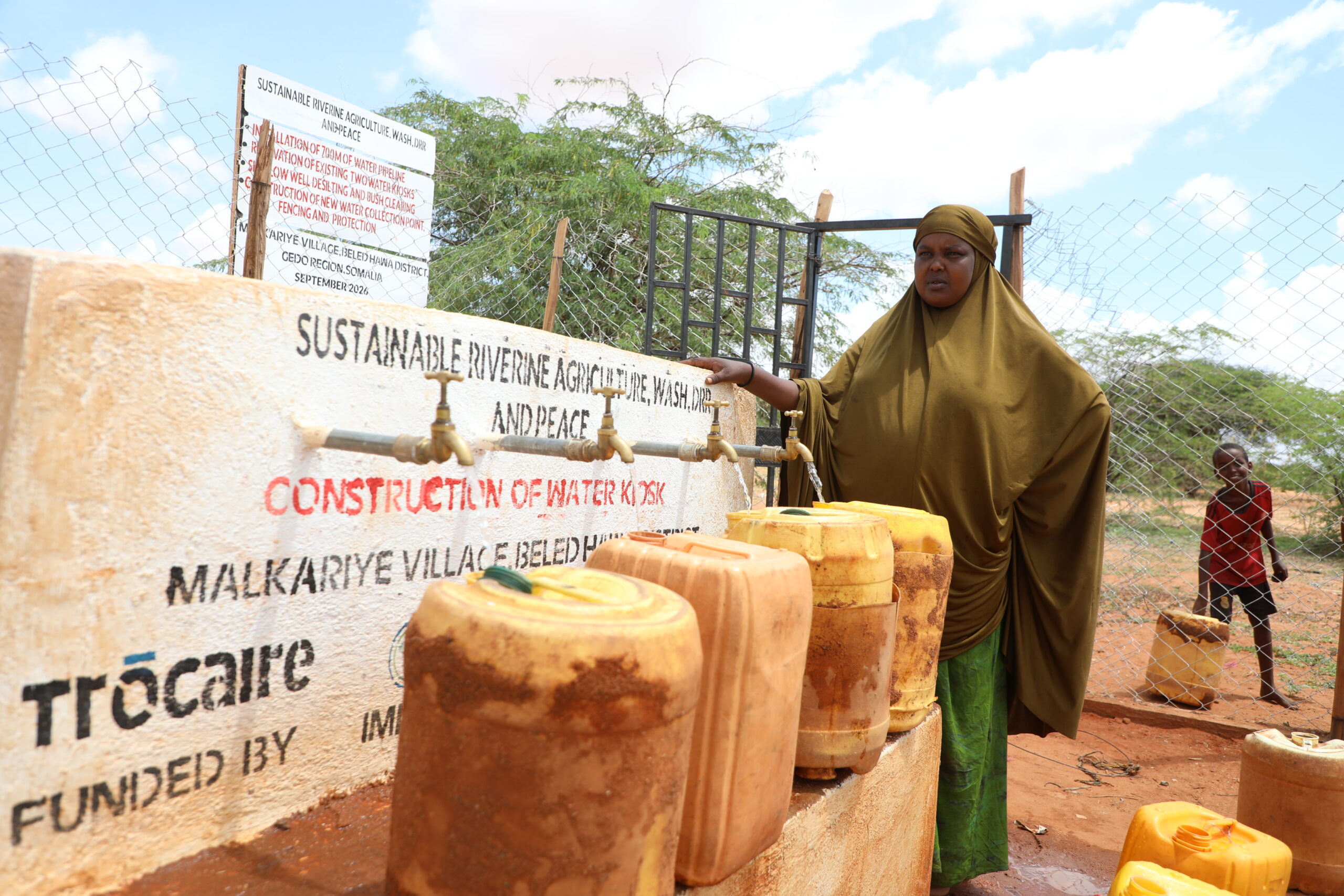
Adey fetching water at the newly constructed water kiosk close to her home.
For Adey Yacqub, a 35-year-old mother of five, water used to mean a long and exhausting journey. She lives in Malkariyey Village in Beled Hawa District, in the Gedo region of Somalia, where for years every drop her family used had to be carried on foot from a source three kilometers away.
With no donkey cart or other transport, each trip brought back a single 20-liter jerrycan, never enough for a family of seven. So she walked the route several times a day, under the scorching sun, along paths overgrown with Prosopis juliflora, known locally as Ali Garoob, and other thorny bushes.
“The hardship we endured to access water was immense,” Adey recalls. “It was exhausting and difficult, especially for us mothers and girls, who had to make sure our families had enough water every day.”
The burden was never only one of time. In the borderlands of Gedo, long walks through dense bush expose women and girls to serious protection risks, including harassment and gender-based violence, and every trip took them further from the safety of the village.
Like many agro-pastoral communities along the Dawa River, Malkariyey lives with recurring drought and climate shocks. The hardest months come with Jilaal, the long dry season, when shallow sources run low and the distance to water grows. When the Nomadic Assistance for Peace and Development (NAPAD) began its community resilience and disaster risk reduction work in the village, with funding from Trócaire, the team did not arrive with a ready-made plan. They sat down with residents and asked what they needed most. That approach sits at the core of disaster risk reduction: the people who live with a risk are best placed to name it and to decide which investment will make them safer.
The community’s answer was clear. Residents asked for a reliable water supply close to home, and that request became the project.
Closer to Home
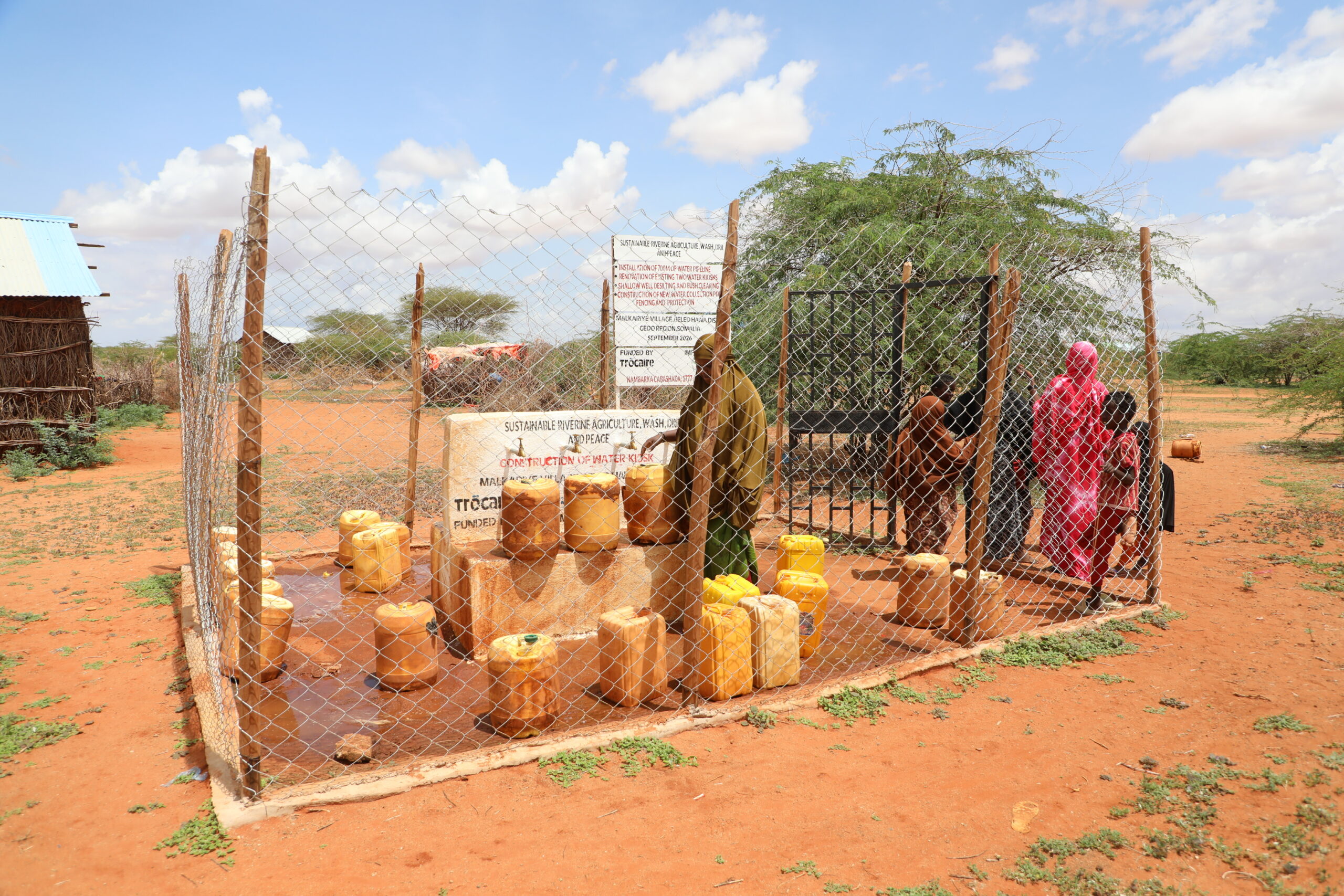
Women and children at the fenced and protected water point in Malkariye village fetching clean water.
Under the Sustainable Riverine Agriculture, WASH, DRR, and Peace project, NAPAD installed a 700-metre water pipeline, renovated two existing water kiosks, desilted a shallow well, cleared the surrounding bush, and built a new fenced and protected water collection point at the center of the village. The water kiosk has eight taps where eight people can fill their jerrycans simultaneously. The kiosk serves 120 households, which is about 600 people. “Each person can fetch water in about one minute,” Adey says. “Even our young children can now help us collect water without having to travel long distances.” The work of keeping the family supplied is now shared across the household, rather than resting on her shoulders alone.
Safer, Fairer, and Built to Last
Bringing the water point into the village has also taken the riskiest part of the day out of women’s routines. The collection point is fenced, gated, and close to every home, and mothers and girls no longer have to cross long stretches of bush several times a day. In Gedo, where pastoral and riverine households depend on the same scarce sources, long queues at a single water point can quickly turn into disputes. With eight taps running at once and a site within reach of every household, the kiosk is designed to keep waiting short and access fair. The hours saved can go back into farm plots along the river, small businesses, and the care of young children.