
In drought-prone Abudwak, kitchen gardens are putting fresh vegetables on the table for families who once depended on whatever reached the market and giving women a new source of food and income.
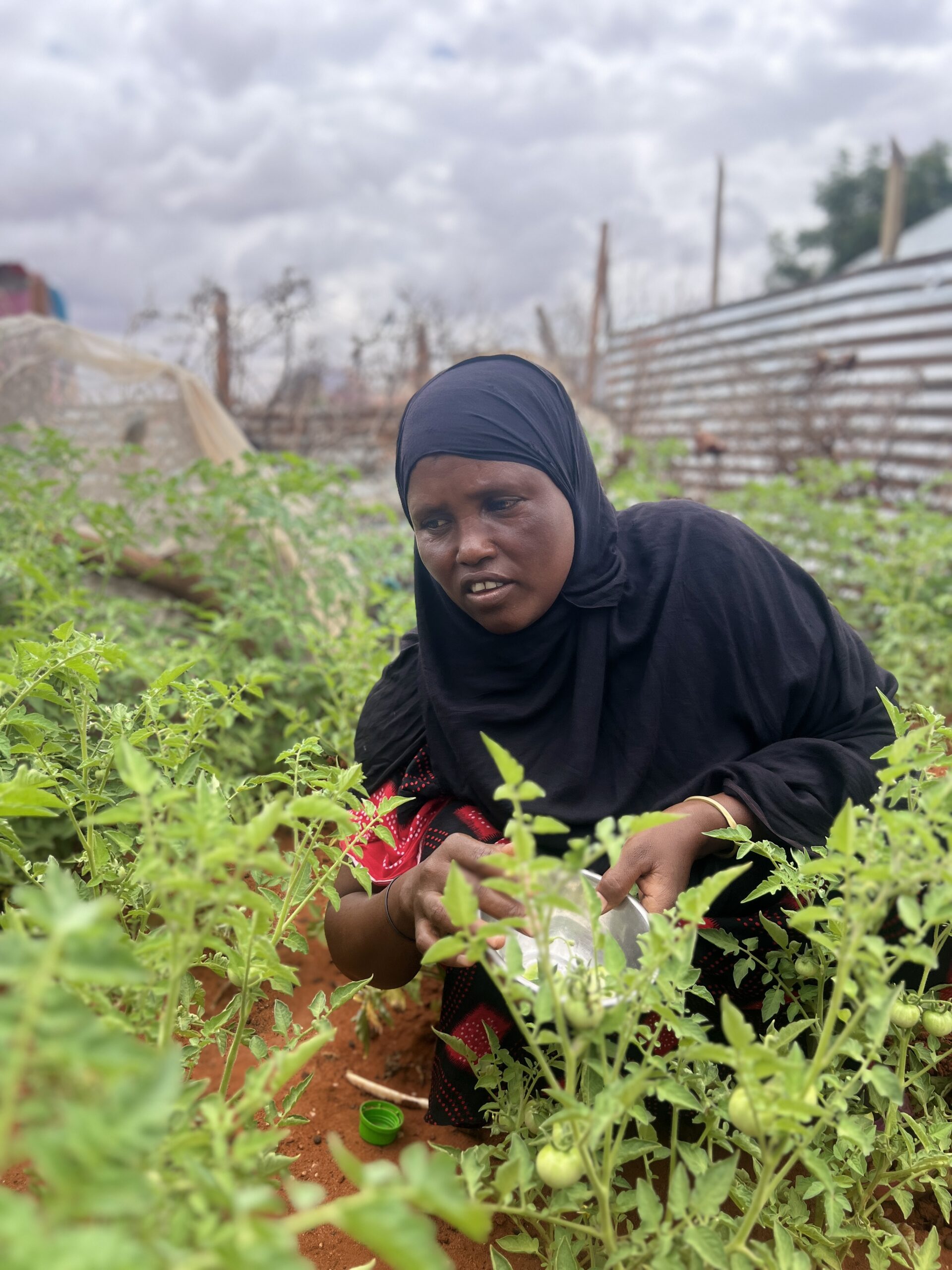
Luul Ahmed tends to her tomatoes in her kitchen garden in Abudwak District
In Abudwak District, in the Galgaduud region of Galmudug State, central Somalia, rain is scarce and the land is dry for much of the year. For Luul Ahmad Laari, a mother living in Abudwak town, fresh vegetables were once something her family could not count on.
Central Somalia has lived through some of its hardest years in living memory. Between 2020 and 2023, rainy season after rainy season failed, livestock died in large numbers, and many pastoralist families moved into towns such as Abudwak in search of food and work. In a place where vegetables are mostly brought in from outside, a long dry season or a closed road can empty the market stalls and push prices out of reach.
“Before the garden, we used to buy vegetables from the market, which were very expensive,” Luul recalls. “The children did not get fresh vegetables regularly. Sometimes they ate them, depending on what was available in the market and what the family could afford.”
When vegetables reached the market at all, they came at a price many households struggled to meet. In lean times, they were simply left off the plate, and children went without the vitamins and minerals that fresh food provides. That began to change when the Nomadic Assistance for Peace and Development (NAPAD), in partnership with German doctors with funding from the German Federal Ministry for Economic Cooperation and Development (BMZ), supported women in Abudwak to establish kitchen gardens close to their homes. Luul was one of them. Alongside the provision of seeds and tools, among other farming inputs, she also received practical training on how to set up a kitchen garden and look after it.
The most important lesson, she says, was that the dry climate did not have to stand in her way. “I was taught that even in a dry place like Abudwak, vegetables can be grown if the soil, the water, and the care of the plants are managed well,” she explains. The training covered climate-smart methods such as mulching, composting, hose irrigation, and water harvesting.
A Garden That Feeds the Family
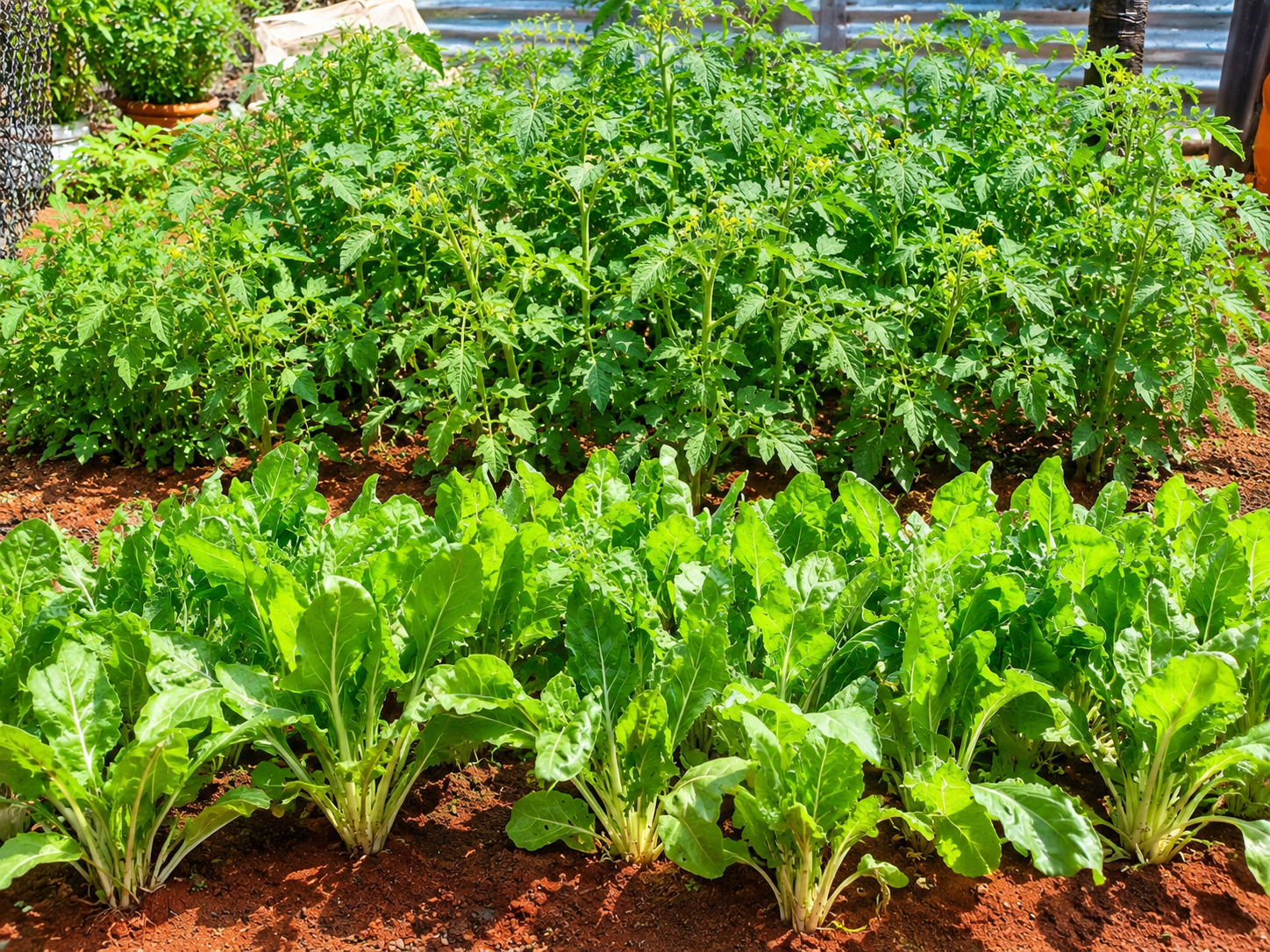
Luul’s kitchen garden close to her home.
Today, her small plot is thick with green. Tomato plants climb in neat rows beside beds of leafy vegetables, watered by a hose that runs between them. The garden is hers to tend, and she makes time for it every single day. “Every morning I water the plants, pull out the weeds, check for insects and diseases, and look after the soil so that everything grows well,” she says.
The results are on the family table. Fresh vegetables picked from the garden are now part of her household’s regular meals, something that was hard to come by before. Her children no longer depend on what the market happens to offer or on whether there is money to spare that week. Nothing goes to waste. When the garden produces more than the family needs, she stores the surplus, shares it with neighbouring families, and sells what remains when the harvest is plentiful. A garden planted to feed one household is now reaching others around it.
A Say in How the Family Earns and Eats
The garden has also changed how decisions are made at home. What to plant, and what to sell, is now discussed and decided together as a family, based on what the household needs and what the market is asking for. “Our decisions have changed since the garden started,” she says, “because we now understand the value of vegetables, and the income they can bring.”
That shift matters as much as the harvest itself. Women who once relied entirely on the market are now producing food, managing a resource and shaping how their families earn and eat. In a region where women carry much of the burden when drought strikes, a garden at the doorstep offers food, income and confidence that do not depend on the next delivery to the market.
Methods like these, built on careful use of water and close attention to the soil, make small-scale farming possible in one of the driest parts of the country. Luul has no intention of stopping. Asked whether she will keep the garden going once the project comes to an end, her answer is immediate: she plans to continue.
For her family, the garden is no longer a project. It is part of their daily life and a source of fresh food grown with her own hands, just steps from their home.