In a displaced camp in Bardheere, a Women and Girls Safe Space (WGSS) gives displaced women a confidential entry point to protection, psychosocial support and referral services, and a platform to make their voices heard.
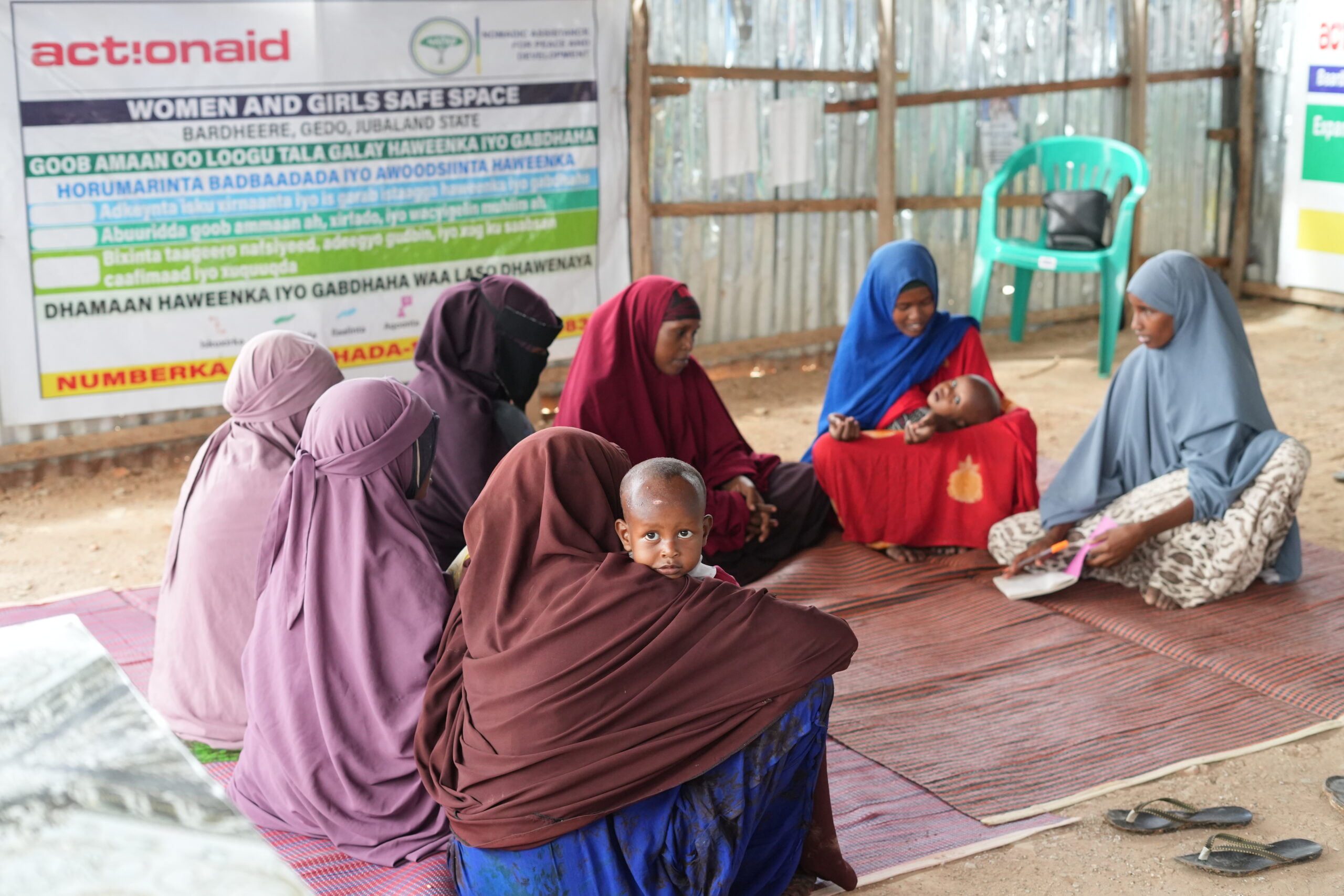
Nuriyo, among other women, takes part in a group discussion at the safe space.
Nuuriyo Abdullahi Mohamed lives in Iftin IDP camp in for internally displaced people in Bardheere District, in the Gedo region of Jubaland State. Like many of the women around her, she knows how hard life in the camp can be. Bardheere sits on the Juba River, and in recent years it has taken in wave after wave of displaced families. Some fled the prolonged drought that dried up water and food across southern Somalia, others the flash floods that followed, and others insecurity in rural areas. They arrived with little or nothing and settled in crowded informal sites, with limited access to clean water, health care, schooling and work.
For women and girls, displacement brings its own dangers. Makeshift buul shelters of sticks and cloth cannot be locked, the camps are poorly lit at night, and overcrowding leaves women and adolescent girls exposed to harassment, intimate partner violence and sexual exploitation. Many also carry the full weight of caring for their families, often without regular work or a reliable income.
“Sometimes we felt worry and despair, because we had no place where we could freely talk about our problems, or get advice and support,” Nuuriyo recalls.
A Women-Only Space for Protection and Support
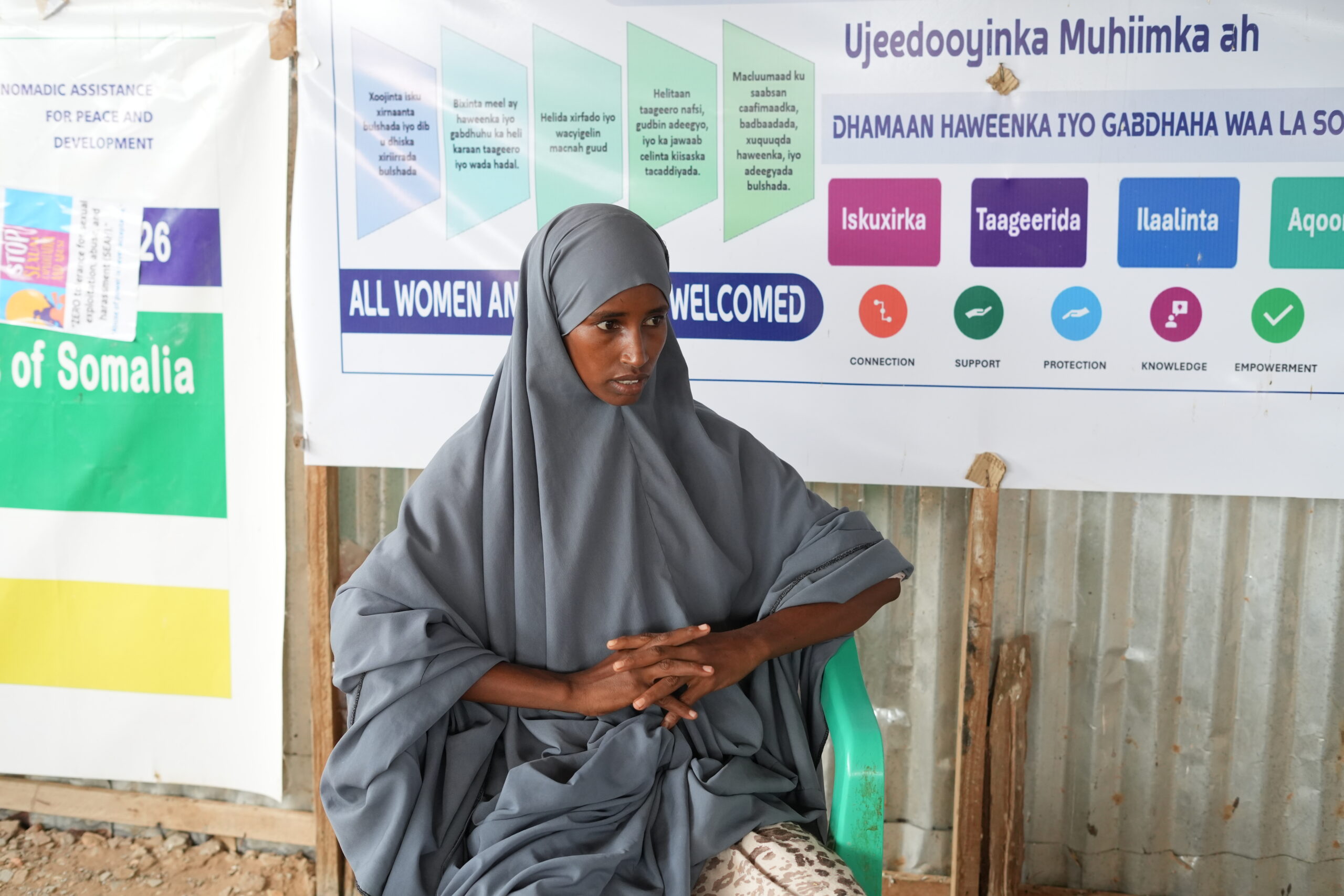
Nuriyo at the women’s centre
That changed when the Nomadic Assistance for Peace and Development (NAPAD), with funding from ActionAid, opened a Women and Girls Safe Space in Bardheere under the Expanding Protection in Communities of Somalia (EPIC Somalia) project. Open only to women and girls, the space is a confidential first point of contact for the prevention of, and response to, gender-based violence (GBV). Its banners set out what it offers: psychosocial support, referral to specialized services, response to cases of violence, and information on health, safety, women’s rights, and community services.
When a woman needs specialized help, trained female caseworkers provide psychosocial support and confidential, survivor-centered case management and refer her to services in the referral pathway: clinical care, including mental health support; legal aid; dignity kits; and livelihood support. Nuuriyo puts it simply: “We learned that if a woman faces a problem that needs special support, she can speak to the centre staff, and she can be referred to the right service, while her privacy and dignity are protected.”
“The centre does not have to solve all of our problems directly,” she adds, “but it helps us get information, advice, support and a connection to the other services that exist.”
Learning From One Another
For Nuuriyo, the first visit was driven by a simple need: somewhere safe to talk with other women and to learn. She found she could ask questions, share her ideas and find out where to go for help, and that brought her back to the meetings again and again. Today she is a regular participant in the group sessions. “When we talk together, we learn how other women deal with difficult situations, and we give each other advice and encouragement,” she explains. She often brings neighbours and friends, and encourages women who have not yet visited to join.
What she learns reaches into her home. Through awareness sessions she has learned about GBV, referral pathways, personal and environmental hygiene, women’s health, and the importance of raising children in a clean and safe environment. Nuuriyo is one of the displaced women and adolescent girls the safe space has reached since it opened in May 2026. With dozens of psychosocial support sessions provided, literacy & numeracy skills, and awareness sessions held, as well as tens of referrals made and dignity kits distributed.
Holding Services to Account
The safe space also gives women a way to hold services to account. The complaints and feedback numbers, the short code 1777 and 0615861983, are printed on every banner and poster in the space, and complaint boxes are available at the centers where NAPAD operates. Women can use them to raise concerns confidentially, report problems with services, or flag protection risks in the camp.
Nuuriyo sees the space as a platform, not only a service. “We also call for women to be given the chance to make their voices heard, and for their needs to be included in the plans for community services,” she says. A women’s group or protection committe has been formed through the space, and it now raises issues such as lighting, latrines, or safety with camp management as an advocacy measure for women and adolescent girls in the camp. She is just as clear about what women need next. Lack of income, unemployment, water shortages, and inadequate shelter remain serious challenges, and she hopes for more training and new opportunities to build skills and earn an income. An income of their own reduces the pressures that can push women and girls into unsafe situations. They also gain access to skills and livelihood activities the space offers, for example literacy and numeracy, which supports them in their day-to-day life.
Her message to other women is one of confidence and solidarity. “We advise other women in Bardheere to join community meetings, learn their rights, support each other, and seek help when they need it,” she says.
For Nuuriyo and the women who gather with her, the safe space has become more than a room. It is a place where they are protected and heard and where they are beginning to shape the support their community receives.