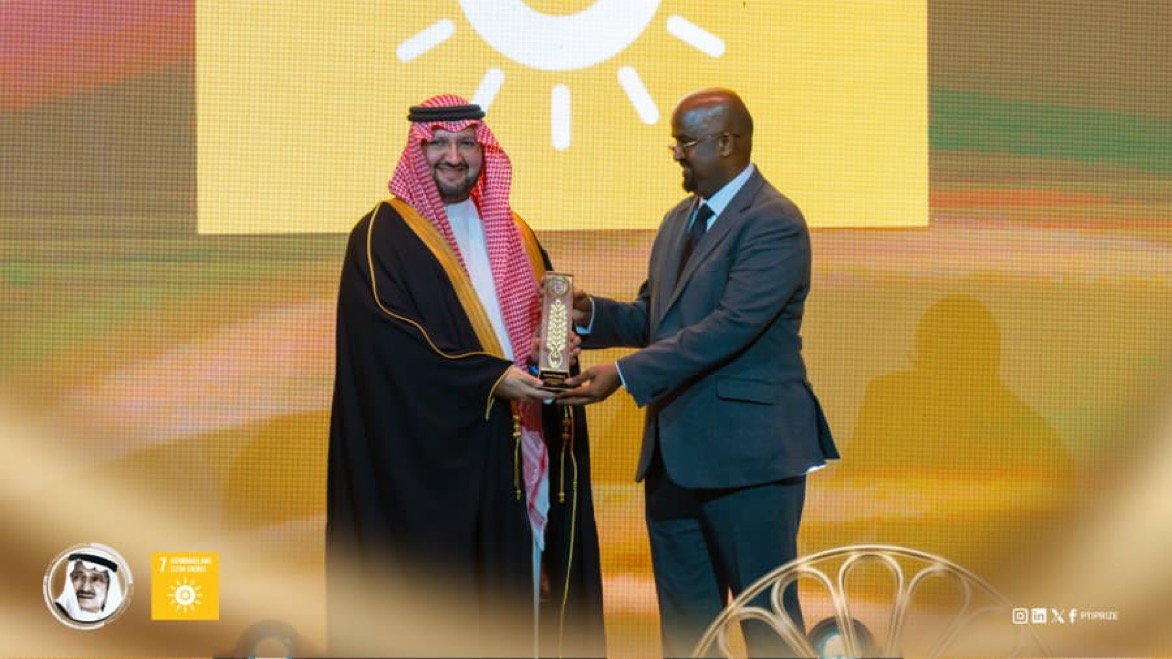
NAPAD ED Abdullahi Hersi receives the prize at the celebration ceremony in Armenia, delivered by HRH Prince Abdulaziz Talal Al Saud.
The recognition of Nomadic Assistance for Peace and Development (NAPAD) through the Prince Talal International Prize for Human Development reflects the impact that can be achieved when local organizations are empowered to lead solutions that respond to community needs.
The Arab Gulf Programme for Development (AGFUND) awards the Prince Talal International Prize for Human Development to identify, recognize, and promote successful development projects that contribute to sustainability and investment in people. The Prize highlights innovative initiatives that improve the lives of vulnerable communities, disseminates successful development experiences, and encourages solutions that address poverty, marginalization, and socioeconomic exclusion. In 2026, NAPAD received recognition under the Second Category, which honours projects implemented by national non-governmental organizations NGOs that have demonstrated innovative, sustainable, and impactful locally led solutions to development challenges.
The award-winning renewable energy initiative was implemented by NAPAD in partnership with Terre des Hommes -TDH Germany and with financial support from the German Federal Ministry for Economic Cooperation and Development -BMZ, demonstrating the value of equitable partnerships that combine local knowledge, community trust, and international solidarity to address development challenges in Somalia.
Through the 3 year initiative, communities in Dolow, Abudwak, Mogadishu, and Mandera adopted renewable energy solutions that strengthened livelihoods, improved water access, and enhanced climate resilience. Five solar-powered irrigation systems enabled subsistence farmers to practice reliable year-round irrigation farming across approximately 60 acres of farmland. More than 1,400 households gained improved access to clean water, while community water systems in Abudwak extended water access to approximately 8,400 people and 175,000 livestock. The initiative also supported 750 farmers through a solar-powered value-addition centre that reduced post-harvest losses, trained 250 farmers in climate-smart agriculture, and enabled 150 women-headed households to establish kitchen gardens.
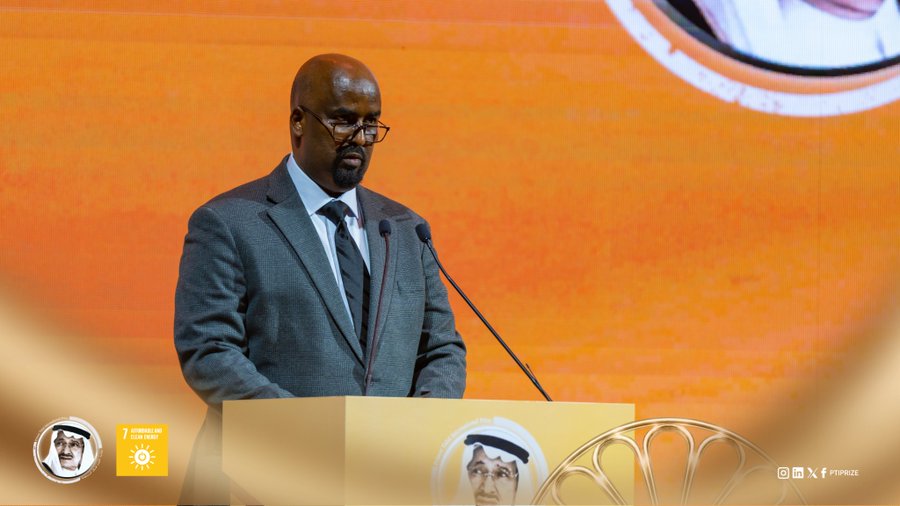
NAPAD ED at the Prince Talal International Prize for Human Development Award Ceremony 2026
While the award is an important milestone, its significance extends beyond institutional recognition. It highlights the growing role of Somali civil society organizations in designing and implementing solutions that are rooted in local realities and driven by the priorities of the communities they serve. Across Somalia, communities continue to face interconnected challenges, including climate change-driven recurring climatic shocks, environmental degradation, energy poverty, and conflict. Addressing these challenges requires approaches that go beyond short-term assistance and invest in long-term resilience.
Local organizations are uniquely positioned to lead this effort. Their close relationships with communities, understanding of local contexts, and long-term presence enable them to identify practical solutions that are sustainable and responsive to local needs. In the case of the renewable energy initiative, the project demonstrates how locally led interventions can contribute not only to improved access to clean energy but also to broader goals of environmental sustainability, climate adaptation, food security, and community resilience.
The recognition further underscores an important lesson for Somalia’s humanitarian and development sector: localization is not only about transferring resources closer to communities. It is also about recognizing local organizations as leaders, innovators, and strategic partners capable of generating transformative solutions. When local actors are trusted with resources, decision-making authority, and meaningful partnerships, they can achieve results that create lasting impact for vulnerable populations.
The collaboration between NAPAD, TDH Germany, and BMZ demonstrates the power of partnerships that value local leadership while leveraging international support and expertise. Such partnerships strengthen the capacity of local organizations to innovate, scale successful interventions, and contribute to national development priorities.
As Somalia continues to navigate complex development and climate-related challenges, investments in local organizations remain essential. Strengthening locally led institutions is not only an investment in project implementation but also an investment in resilience, sustainability, and community ownership. The international recognition of NAPAD’s work serves as a reminder that some of the most effective and lasting solutions emerge when communities and local organizations are placed at the centre of development efforts.
Ultimately, this achievement represents more than an award. It reflects the potential of locally led development to deliver meaningful change and demonstrates how strong partnerships can amplify community-driven solutions, contributing to a more resilient and sustainable future for Somalia. Through sustained investment, trust, and collaboration, local organizations can continue to lead the innovations that strengthen communities and help Somalia address its most pressing development and climate challenges.