For Habiba Mohamed Odawaa, a mother of four living in Camp Bakaal, Baardheere District, access to safe sanitation was once a daily struggle. Like many displaced families in flood-prone areas in Somalia, Habiba and her neighbours relied on makeshift or shared pit latrines that often collapsed or overflowed during the rainy season. "When the floods hit, the smell was unbearable, and we feared for the health of our children.” Habiba shared. “It was also very hard for us women and our children to use the toilets at night.” Conventional pit latrines often become submerged during floods, causing faecal contamination of water sources and outbreaks of acute watery diseases, especially cholera. Studies show that over 15% of latrines in flood-affected zones become unusable during floods, forcing communities to revert to unsafe defecation practices.
The absence of safe sanitation did more than threaten their health; it stripped away their dignity and security, especially for women and girls. In the dark, the lack of lighting made the simple act of using a latrine a safety concern. Many women faced the risk of sexual and gender-based violence (SGBV) while searching for a private place to relieve themselves after nightfall. For mothers like Habiba, ensuring her children’s safety was a daily concern.
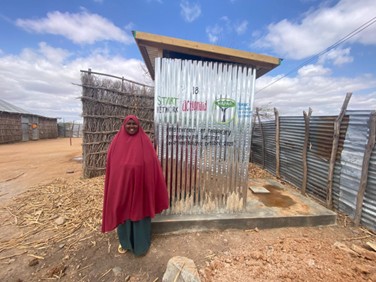
To respond to these challenges, Nomadic Assistance for Peace and Development (NAPAD), in partnership with Action Aid, implemented the Flood Anticipatory Action Project in Baardheere District. A key component of the project focused on improving sanitation and hygiene conditions in internally displaced persons (IDP) camps that are highly vulnerable to flooding. This led to the construction of 38 emergency sealed pit latrines across three camps in Kaam Jirix, Iftiin and Bakaal. Each latrine has been constructed on raised platforms to withstand flooding, and equipped with lockable doors to ensure privacy and safety, particularly for women and girls. As a result, more than 1,000 displaced households now have access to safe, dignified, and flood-resilient sanitation facilities, significantly reducing the risk of disease and restoring a sense of dignity to the affected families.
“These new latrines have been such an improvement in our daily life,” Habiba shared with relief. “Our surroundings are cleaner, and I no longer worry about my children getting sick. Having a safe and private place has given us a sense of security and encourages us to consistently use of sanitation facilities.” She continued.
By investing in sustainable, flood-resilient sanitation solutions, NAPAD and ActionAid are not only addressing immediate public health risks but also strengthening the long-term resilience of flood-affected communities. For women like Habiba, it has restored her confidence and given her peace of mind, knowing her daughters can safely use the latrines even after dark with the provision of solar lamps that enhance safety and accessibility.
As the rainy season continues, Habiba now views these latrines as more than sanitation facilities but as symbols of safety, dignity, and resilience. Through this project, NAPAD and ActionAid continue to support vulnerable displaced and flood-affected families in Somalia, to strengthen their resilience, adopt better hygiene and sanitation practices, and protect the health and dignity of vulnerable groups especially women and girls.