
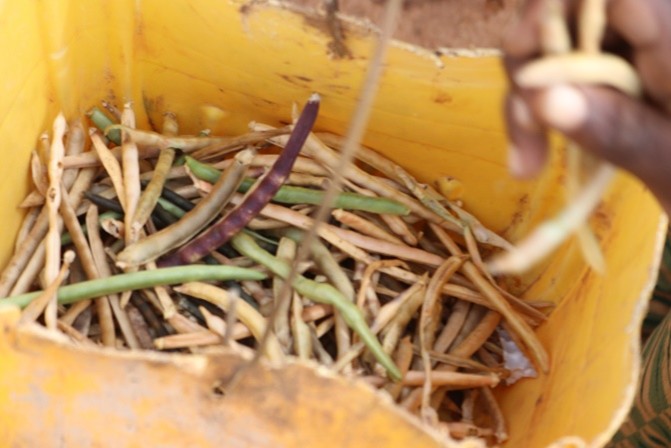
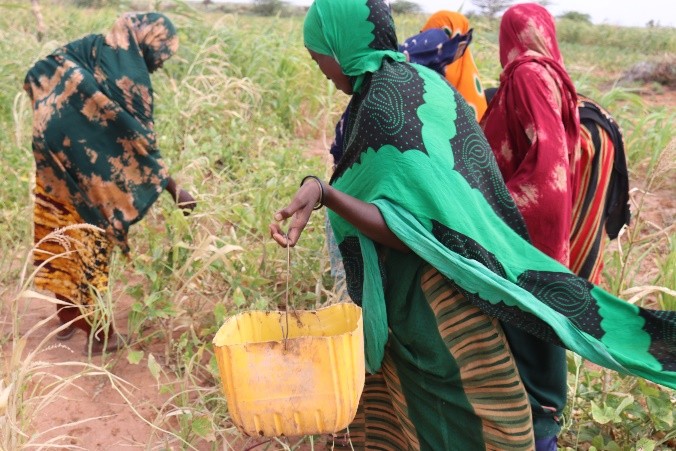
Mama Anab harvesting peas from her farm together with her women group
Busle village, located in Somalia's Gedo region along the banks of the Jubba River, is home to approximately 200 households. The community comprises small-scale agro-pastoralists who relied on rainfed agriculture or earth canal irrigation from the river to practice farming. In recent years, their livelihood has been challenged due to prolonged droughts, recurrent flooding, pest infestations, and the escalating impacts of climate change. These challenges have led to significant crop losses, forcing many farmers to abandon farming in search of menial jobs to support their families. Traditional farming practices, once sufficient, have become increasingly unsustainable as the community struggles with unpredictable weather patterns.
In response, Nomadic Assistance for Peace and Development (NAPAD), in partnership with Medico International (MI) and with funding from the Federal Ministry for Economic Cooperation and Development (BMZ) through the SEWOH Project, launched a project to empower riverine farmers in Busle. This project focuses on promoting climate-smart agricultural practices to improve food security and increase the incomes of small-scale farmers through sustainable, climate-resilient subsistence farming.
Solar-powered irrigation farming in Busle
Through a series of Climate Smart Agriculture (CSA) trainings, 50 farmers acquired knowledge and skills in sustainable farming practices. They have also embraced eco-friendly pest control methods, replacing harmful chemicals with natural alternatives such as the Neem tree. To reduce the impact of seasonal floods, the farmers relocated to a farm that is away from flood-prone areas, as they had traditionally farmed near the river for easier irrigation access.
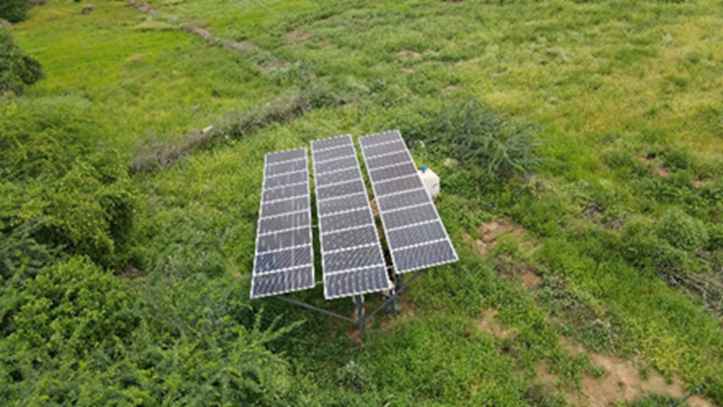
To support this transition, NAPAD installed a solar-powered water pumping system for irrigation and constructed a drilled shallow well. This shift from traditional hand-dug wells to modern, sustainable drilled wells addresses several challenges. Hand-dug wells, while initially lifesaving, were limited to depths of 9 meters, often drying up during prolonged droughts. They were also prone to contamination, required extensive labour and time to construct, and were vulnerable to damage and silting during floods, leading to frequent repairs and unreliable water access.
In contrast, the drilled shallow well of up to 30M, combined with the solar-powered pumping system, ensures a consistent water supply. Water is pumped into a 60,000-liter concrete water storage tank and distributed through a pipe network, providing a reliable irrigation system for the farm.
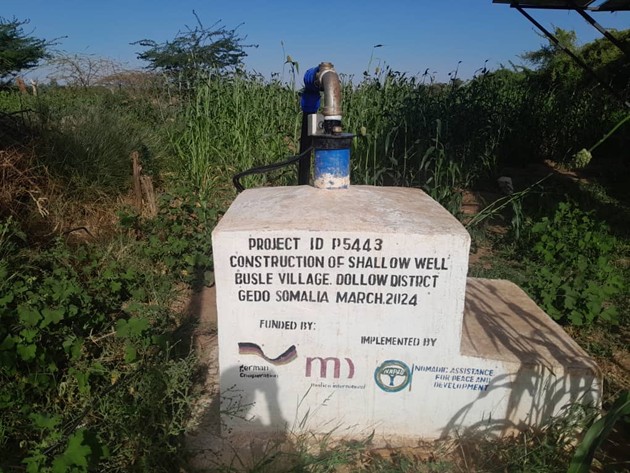
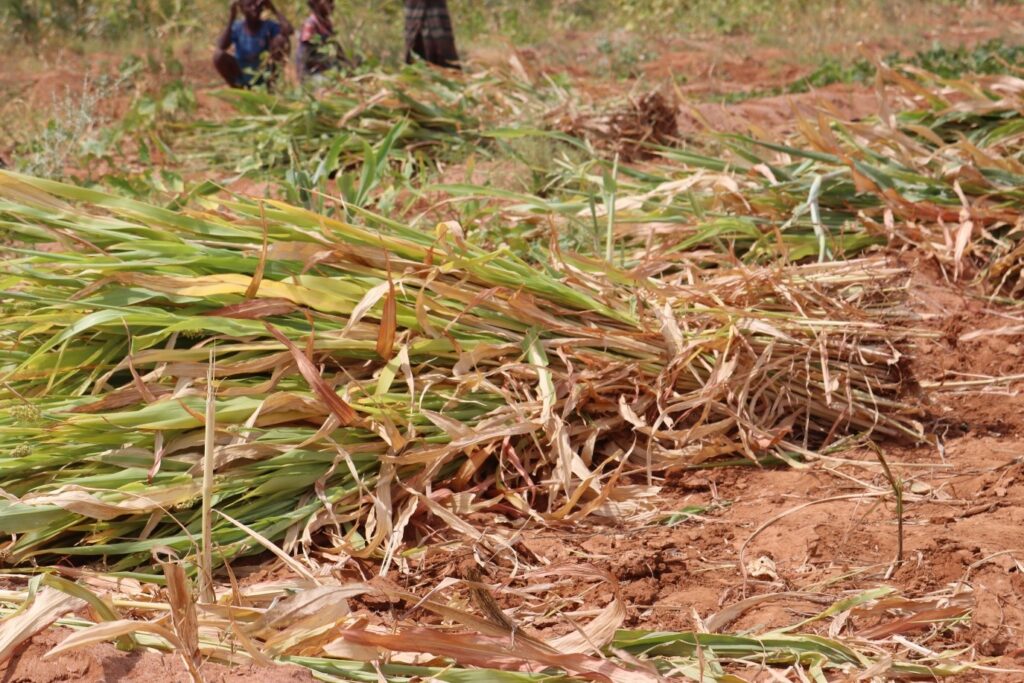
The farm is producing crops such as sorghum, cowpeas, bananas, pawpaw, and Sudan grass. Recent harvests of sudan grass, sorghum, and tomatoes have been sold at local markets, generating income to support households. “The whole process has truly improved our skills in farming. We now farm with purpose, knowledge, and the resources needed for sustainable farming,” shared Mama Anab, a farmer from Busle.
The ripple effects of these interventions go beyond the 50 farmers. By adopting climate-smart agriculture practices, the farmers of Busle have increased their food security, improved their income, diversified their livelihoods, and strengthened their resilience to climate change. With NAPAD and MI’s support, these farmers are now champions of climate resilience, empowering neighbouring communities to start practising climate smart agriculture.