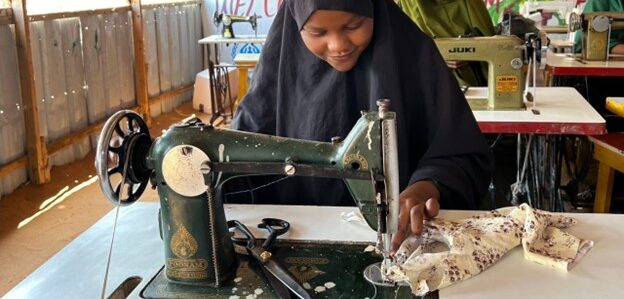
Technical and vocational training plays a vital role in improving livelihoods and alleviating poverty, particularly for women who are disproportionately affected by climate change and conflict in Somalia. These challenges often lead to displacement and loss of livelihoods, exacerbating issues like sexual and gender-based violence.
In response to these urgent needs and to promote protection and empowerment of at risk women and girls, NAPAD, in collaboration with UNWOMEN and funded by the Government of Japan, initiated the "LEAP III" Project. This project aims to enhance the resilience of women in Kismayo, Baidoa, Garowe, and Banadir regions against the gendered impacts of climate change.
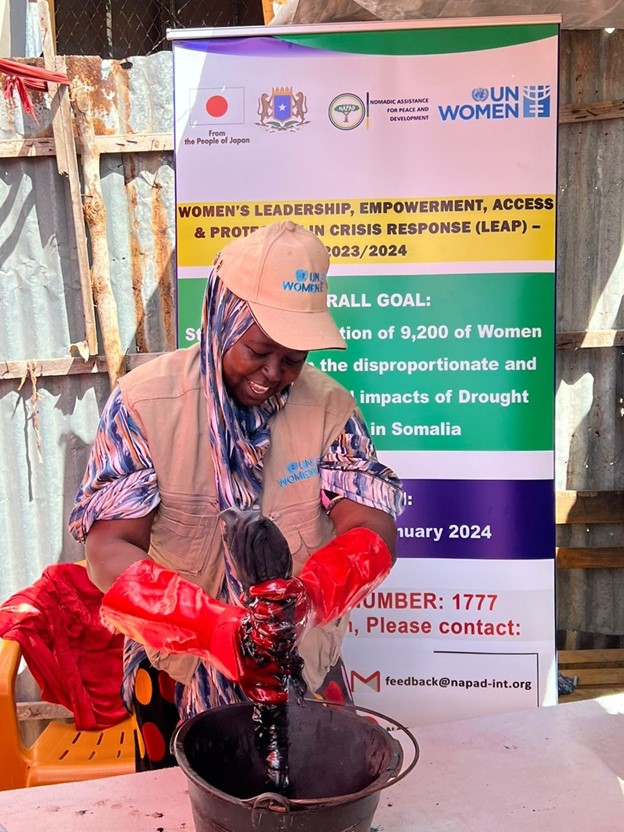
Through local GBV One-stop centers, survivor women received specialized technical training to kick-start income-generating activities in their communities. One such success story is Hawa Mohamed Abdi, a 35-year-old mother from Kahda district, who learned tie and dye techniques. Inspired by her newfound skills, Hawa aspires to open her own shop to sell her unique designs.
The project offered short courses focusing on market-relevant skills such as henna application, beauty and hairdressing, tailoring, shampoo making, tie and dye, and baking. Participants also received life skills training and psychosocial support to boost confidence and resilience.
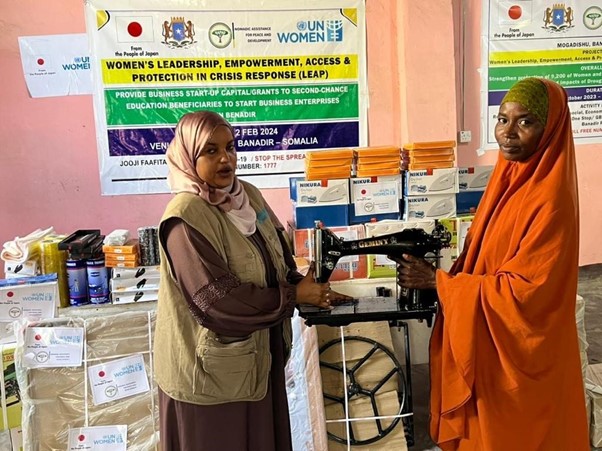
Graduation ceremonies marked the successful completion of training for 440 women in Banadir, Garowe, Baidoa and Kismayo, providing them with valuable skills in tailoring, tie and dye, henna application, hairdressing, and baking. These ceremonies facilitated connections with local financial institutions, paving the way for access to business credit and fostering economic empowerment and sustainability.
With tailored in-kind support, these women are equipped to launch their own businesses, contributing not only to their personal growth but also to the economic development of their communities.